Inside the Sustainable Eco Abode: An interior tour of the Tiny House at Begnas

At Archiformus Nepal, our approach is always driven by the client’s needs. For the eco abode at Begnas, Nepal, the client’s priorities for the interior spaces played a significant role in shaping the design process.
The client requested a compact home of around 40 square meters (about 430 square feet) that would respond to the tropical climate but also take full advantage of his property’s scenic views. The goal was to create a strong connection between indoor and outdoor spaces while maintaining a practical, simple layout.
Our initial plan included the following spaces:
Ground floor: Entrance porch, living room, kitchen, and deck connected to the outdoors
First floor: Bedroom, bathroom, and balcony
Initially, during our design process, we also considered optional spaces within the same area: kitchen storage, powder room, walk-in closet, and even an outdoor Jacuzzi. However, the client wanted to keep the design true to a ‘tiny house’ concept, prioritizing simplicity over additional spaces.

After sketching out multiple layouts, a key design decision we took was to eliminate the second floor entirely. This drastically simplified the construction, by removing the staircase and reclaiming valuable space otherwise used for circulation.
Passive design principles were a key part of the layout. Positioning the bathroom towards the west would act as a buffer against the harsh west sun. But this allowed the main living areas to enjoy unobstructed, 180 degree views of the surrounding landscape of the hills.

The final ground floor plan features a seamless layout, with an open living and kitchenet area that flows naturally into a more private zone containing the bedroom, closet, and bathroom. A terrace wraps around the living room, extending the indoor living space into the outdoors.

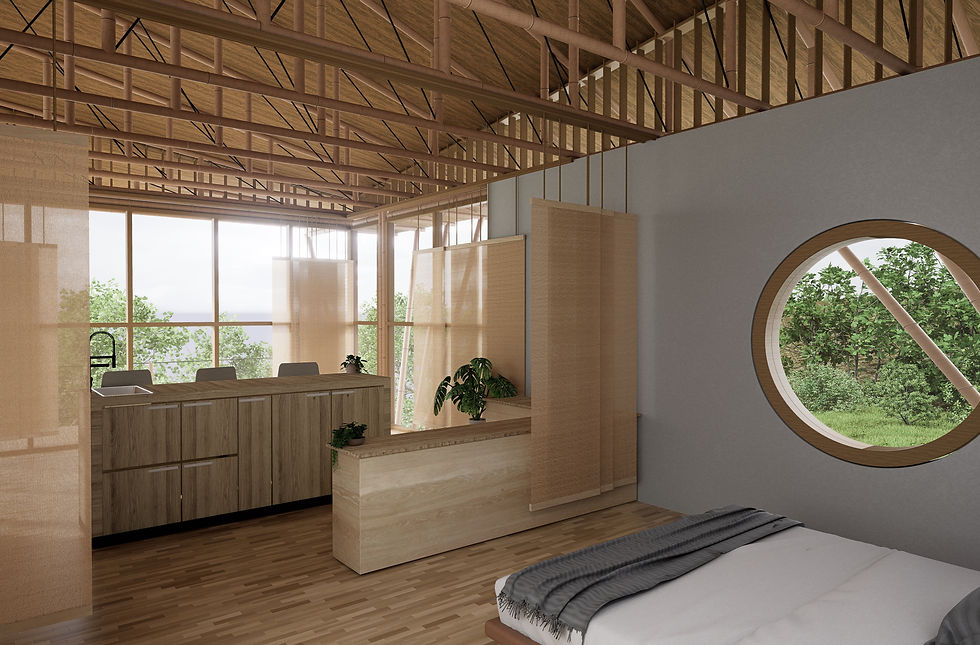
The use of cement bamboo frame technology allowed for clean, white interior walls with selective exposed bamboo accents. Light colored wood was used for flooring and carpentry, creating a warm atmosphere while visually expanding the interior space.
Natural light plays a vital role in the design, flooding the interiors and enhancing the connection with the outdoor environment.
This interior design reflects the client’s vision for a compact, functional, and sustainable tiny home that embraces the natural context of Begnas.
At Archiformus, we remain committed to design solutions that thoughtfully balance our clients’ needs with environmental responsibility. The proposal for this project is guided by our team’s belief that simplicity can often lead to the most meaningful and sustainable outcomes.


Comments